
Prohibition and the Leitrim Connection
The Raid
The night-time raid on the illegal distillery at Riley’s Hill, Bayview, San Francisco nearly ended in total disaster. In any event it left James Muldoon, a Leitrim native, fighting for his life. The illegal still, located in a camouflaged shack, was protected by a number of gun traps. Corporal James Muldoon of the San Francisco Police unwittingly triggered an anchored shot gun when he stumbled against the tripwire in the dark. The single discharge almost tore the Leitrim man’s right leg off. A moment later his colleague, Special Policeman Harry Hughes, had a close escape when a bullet whistled past him. Hughes had triggered a rifle clamped to the door of the shack.
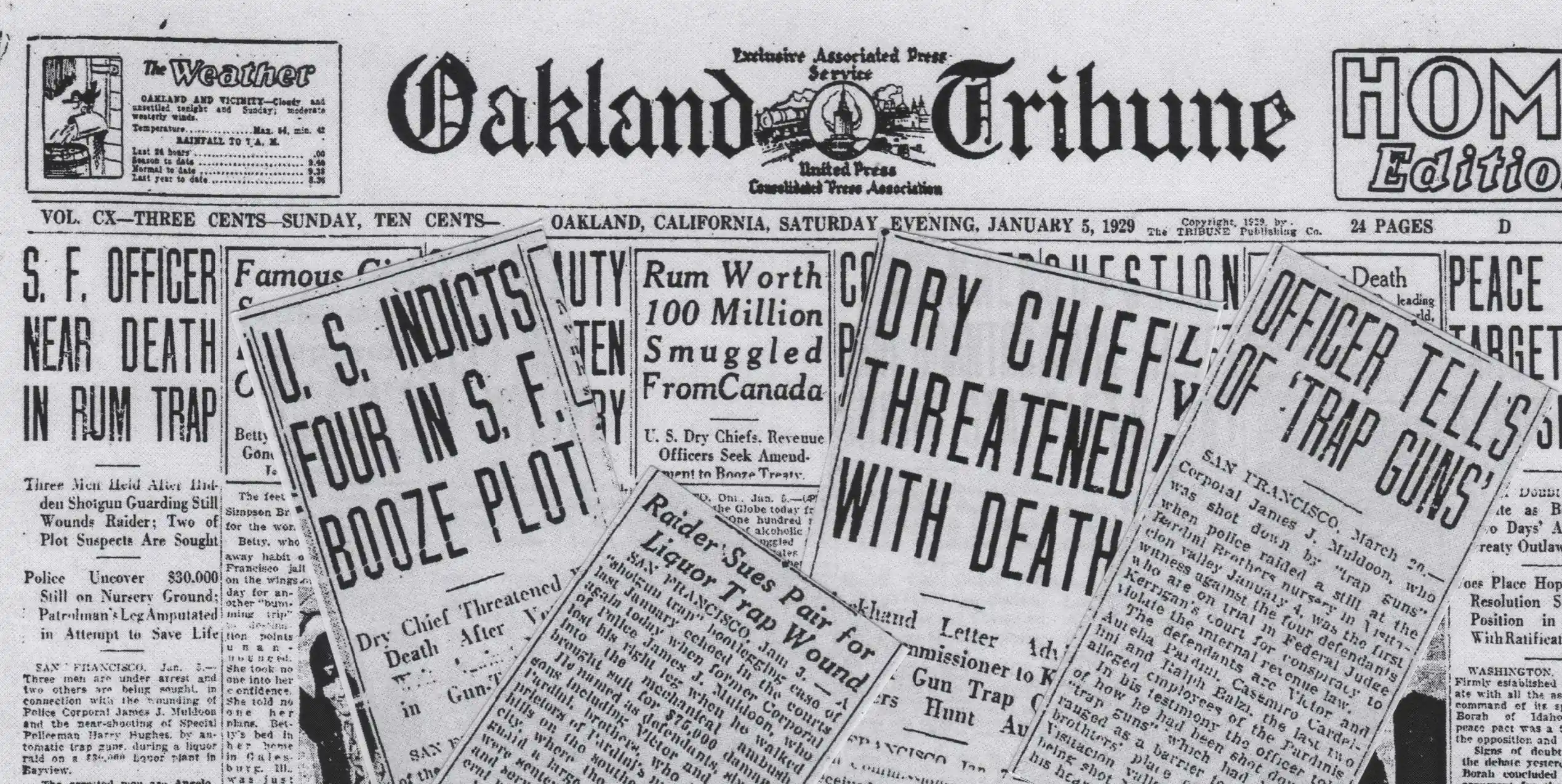
In the dark of night on January 4th, 1929 Muldoon, Hughes and another police colleague, Victor Olsen, had gone to investigate reports that a huge still was in operation on the site of a plant and tree nursery. Immediately after the shot that just missed Hughes, a man ran from the rear of the shack which was partially concealed by branches. Hughes and Olsen carried their gravely wounded colleague to safety and lifted him into the ambulance that had responded to their emergency call. A large number of police also answered their call, coming to their aid, armed with rifles, shot guns and tear gas. They carried out an extensive search of the nursery site, alert for the presence of any other potentially fatal booby traps. The camouflaged premises were found to contain a 250-gallon still and eighteen 300-gallon vats of mash. In later follow up searches the police arrested the owners of the nursery, brothers Angelo and Victor Pardini, while continuing to search for two other suspects.
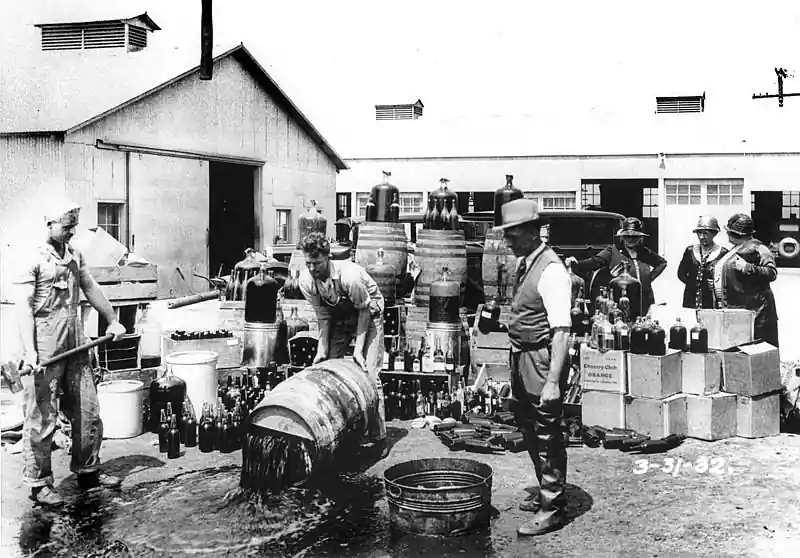
Prohibition had come into force across the United States in January 1920 following the passing of the 18th Amendment a year earlier. The Volstead Act, which was the enabling legislation, prohibited the production, sale and transport of intoxicating liquors. The early success of the legislation saw estimated U.S. alcohol consumption fall to 30% of pre-Prohibition levels. However criminal gangs across the U.S. were quick to set up ’bootlegging’ operations to replace the previously legal business. Consumption levels increased and battles for market control led to increasing violence and murder, with major gangsters, such as Chicago’s Al Capone, attaining national notoriety. On the very day that the local Oakland Tribune carried the Riley’s Hill story on its front page, it had alongside it a report indicating that estimates of 100 million dollars of alcohol beverages had been smuggled from Canada into the United States in the previous five years.
Following his arrival in hospital, Corporal Muldoon’s condition was critical and he required immediate and extensive blood transfusions. Three police colleagues all donated blood which was followed by an emergency operation to amputate his leg. The Oakland Tribune reported on its front page the following day that the San Francisco policeman was near death. James Muldoon was born in Cloodrumin, Fenagh in May 1884, he emigrated to America in April 1907 and married Mary Ann Quinn in 1917. The Muldoon family unfortunately were no strangers to violent tragedy. James’ brother, Dr Patrick Muldoon, a highly respected doctor, had been murdered in a gun attack on the streets of Mohill in March, 1923 just six years previously.
Investigation and Trial
With Corporal Muldoon’s life still under threat, the police investigation into the Riley’s Hill raid took an ominous turn. E.R. Bohner, Prohibition Administrator for Northern California, received a letter warning him off the case, under threat of death, it also threatened the investigating police. The letter was signed ‘The Black Hand Gang’, but Bohner, who considered it was only a ‘crank note’, immediately arranged for the destruction of the illegal still and its contents. Meanwhile the police force, now aided by Federal investigators, continued the hunt for those responsible for the gun-trap that had caused the amputation of Corporal Muldoon’s leg and might yet cost his life. They were also searching for the authors of the threatening letter.
By Tuesday, 8th January, just four days after the Riley’s Hill ambush, responsibility for the entire prosecution and investigation of the case had been handed over to the Government. The police were now working with Government secret service men probing what was adjudged to be one of the biggest bootleg operations uncovered in months. George Hatfield, the U.S. Attorney for Northern California was adamant that ‘Chicago gangster methods are going to be stamped out in San Francisco’. He went on to warn ‘When gangsters threaten the United states Prohibition Administrator with death for doing his duty, they have started something the Government will finish for them’. The authorities were taking a tough public stance on the case.
The following day the Pardini brothers and a third defendant, Casimir Cardellina, were indicted on six counts of conspiracy to operate a still and a further six counts of conspiracy to violate the internal revenue act. In addition to these Federal charges, for which bail was set at $20,000 for each defendant, they also faced police charges of assault to murder, assault with a deadly weapon and illegal operation of a still. Cardellina was alleged by the police to be an employee of the Pardini brothers and to be the person responsible for setting up the gun-trap that caused such severe injury to Corporal Muldoon. Somewhat fortunately for all three defendants Muldoon’s doctors were reporting that his condition was showing improvement and they believed he would recover. Victor and Aurelio Pardini were quickly able to provide the necessary bail bonds while their employee was also expected to be in a position to do so later. A Preliminary Hearing for the charges was set for 17th January.
By the time the full hearing of the case opened on 20th March 1929 James Muldoon had recovered sufficiently to attend the trial. He was the first witness called for the prosecution. In his testimony he outlined how he had been shot down by a gun-trap which had been set up as a barrier to prevent access to the illegal still at the Pardini nursery at Riley’s Hill. As a result of the massive injuries he had received he had lost a leg and his hearing was impaired. The trial resulted in the two Pardini brothers being sentenced to 18 months Prohibition and the Leitrim Connection 35 each in federal prison and in having to pay $2,000 in fines.
Aftermath
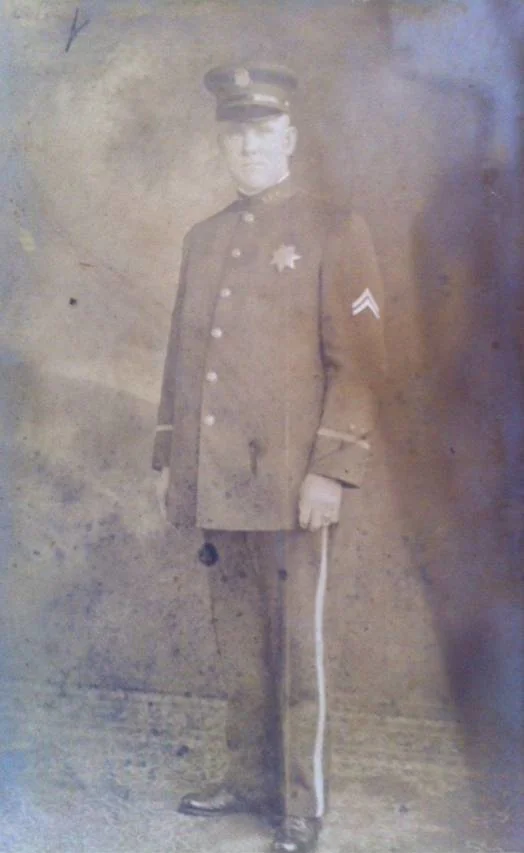
That wasn’t the end of the affair as Corporal James Muldoon took a civil case against the Pardini brothers and four others. The claim for $75,000 was heard on the 3rd March 1930. This was a brave move by the badly injured police officer as the U.S. Attorney for North California had previously likened the Riley’s Hill incident to Chicago Mafia gangsterism. Even after sustaining such severe injuries, and while now confined to desk duties, the Leitrim born policeman had not lost his fighting spirit nor sense of justice.
Just five years after the Riley’s Hill incident that nearly cost James Muldoon his life, Prohibition in the U.S. was repealed in December 1933. The ever-increasing ignoring of the law by much of the general public had seen illegal alcohol consumption gain increasing social acceptance. Consumption levels had risen to nearly 70% of pre-Prohibition estimates, and as organised crime violence increased in tandem with the demand for alcohol, opposition to Prohibition became overwhelming. The negative legacy of Prohibition included an unwelcome boost to both organized crime and the level of bribery and official corruption across the United States. The high toll of murders and maiming inflicted by the criminal gangs fighting to control and protect their illegal trade would cast a long shadow over many families. James Muldoon was left with a permanent reminder of his efforts to enforce Prohibition, he would go on to live an exceptionally long life. He visited Ireland at least once after sustaining his dreadful injury, he died aged 92 in 1976.
Notes
All rights reserved by Ken Boyle. Reproduced on Leitrim Books with permission.