
Ita Daly
Biography
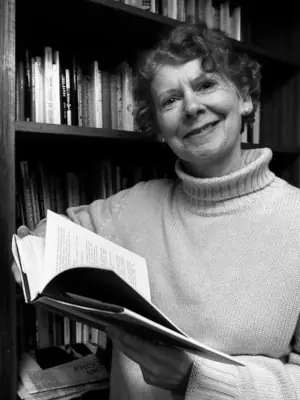
Ita Daly is an Irish novelist, short story writer, and author of children’s literature whose work emerged during a transformative period in Irish cultural history. Born in 1943 in the rural west of Ireland, Daly’s literary career has spanned several decades and encompasses a wide range of genres. Her published body of work includes five novels for adults, two contemporary children’s books, a highly regarded collection of short stories, an edited historical volume, and a memoir. She is recognised for her observant, understated exploration of domestic life, the psychological complexities of women navigating traditional social expectations, and the enduring tension between rural Irish origins and modern urban existence.
Daly’s career developed alongside the late twentieth-century expansion of Irish literature, a movement in which women writers began to shift focus away from grand, nationalist narratives to concentrate on the intimate, often restrictive realities of everyday life. Her fiction provides a detailed record of the shifting social fabric of Ireland, documenting the transition from a conservative, agrarian society to a rapidly modernising European state. Beyond her fiction, she is also known for her marriage to the late David Marcus, a highly influential literary editor who played a central role in discovering and promoting an entire generation of Irish writers. Recognised for her lasting contributions to the arts, Daly was elected to Aosdána, the state-supported Irish association of artists.
Early Life and Family Background
Ita Daly was born in 1943 in Derryhallagh, a townland just outside of Drumshanbo in County Leitrim. She was the only daughter of Padraig Daly and Anna Daly (née Herron). Her family background reflected a geographic diversity that was somewhat uncommon in the immediate area at the time: her father was originally from Rathangan, County Kildare, her mother hailed from Fintown in County Donegal, and her older brother, Conleth, had been born in Dublin.
Padraig Daly worked as a civil servant, specifically as a Social Welfare Officer—or Pensions Officer, as the role was known then. His occupation required the family to relocate, bringing them to Drumshanbo. Initially residing in a large, dilapidated, and rat-infested house in Derryhallagh, the family soon moved into the town proper, renting a home in Barrack Square directly opposite the local Garda station. This central location provided the young Daly with a vibrant, front-row seat to the daily rhythms and occasional dramas of rural Irish life, from observing drunks being placed in the barracks to sober up to the bustling excitement of fair days.
Daly’s recollections of her childhood in Leitrim depict an idyllic, unstructured, and deeply communal environment. Mid-twentieth-century rural Ireland was marked by significant poverty and a lack of modern amenities. The Daly family did not own a car; when Padraig Daly was required to visit remote farms to assess individuals for blind or old-age pensions, he hired the local hackney—a large American limousine owned by Hubert McPartland. The entire family would often accompany him, walking across fields to isolated farmhouses where Daly observed her father recording details of livestock and arable land. These visits exposed her to the stark realities of rural poverty, yet her father carried out his duties with a sensitivity that left a lasting impression on his daughter.
Child-rearing in Drumshanbo was largely a communal, tribal affair. Children roamed freely through the countryside, untethered by the intense supervision characteristic of later eras. Boundaries between households were fluid; a child might have dinner in one neighbour’s house and tea in another’s. Daly later reflected that this approach provided a sense of freedom and belonging that would stand in stark contrast to her later experiences in urban environments.
The sensory and cultural memories of Drumshanbo deeply informed Daly’s later artistic sensibilities. She recalled the distinct smell of cow manure mixed with fresh herrings on fair days, the arrival of tinker clans (such as the matriarch Mrs. McDonagh, who once handed her baby to Daly’s mother before rushing off to a street brawl), and the exquisite taste of Paddy Donnelly’s home-frozen ice cream on a July afternoon. Communal celebrations, such as St. John’s Eve bonfires in June and Halloween games involving rings, water, and clay, reinforced a sense of ancient, shared culture.
This pastoral existence came to an abrupt end when Daly was thirteen years old. A declining local population meant her father’s position in Drumshanbo could no longer be sustained, and the family was transferred to Dublin.
Relocation and Education
The transition from the tight-knit community of Drumshanbo to the sprawling, boundary-conscious suburbs of Dublin was a defining psychological event in Daly’s life, generating a profound sense of exile. In Dublin, she experienced an acute culture shock. The communal open doors of Leitrim were replaced by the closed garden gates of suburban Rathmines, where neighbours did not casually turn the knob and walk in.
Daly found herself suddenly and painfully aware of her rural accent, her different school uniform, and her perceived lack of sophistication compared to her urban peers. She recalled the intense embarrassment of walking around St. Stephen’s Green four times to find Leeson Street, too ashamed to ask for directions lest someone discover her “dread secret” that she was from the country. This deep sense of alienation and of being an outsider looking in fostered a natural shyness, pushing her toward intense observation and extensive reading as a form of psychological escapism.
Daly continued her education at St. Louis High School, a convent school in Rathmines. Despite her initial feelings of provincial inadequacy, Daly navigated her secondary education successfully and subsequently enrolled at University College Dublin (UCD), where she studied English and Spanish. She graduated with a Bachelor of Arts, followed by a Master of Arts and a Higher Diploma in Education.
Interestingly, while Daly had begun writing stories as a hobby at the age of nine, her creative output ceased almost entirely during her secondary and university years. She later attributed this pause to the highly scholastic and analytical approach to English literature taught at UCD, which temporarily stifled her creative impulses and replaced the joy of narrative with rigid academic dissection.
Teaching Career
Uncertain of her career path following university, Daly turned to teaching at the suggestion of her parents. In a display of the maternal intervention that would later heavily feature in her fiction, her mother answered a job advertisement on her behalf, securing Daly a teaching position back at her alma mater, St. Louis High School in Rathmines.
Daly worked as an English teacher at the secondary school for eleven years. During this time, the cultural and political landscape of Ireland was shifting rapidly, and Daly herself underwent significant personal development. Reflecting the ideological turbulence of the late 1960s and 1970s, she briefly joined a Marxist-Leninist political party—an action that the school’s progressive principal reportedly took in stride, illustrating the changing atmosphere within Irish Catholic education.
Daly largely enjoyed her teaching career, noting later that she loved teaching but, while she initially missed it, she wouldn’t go back. Her connection to the school remained strong long after her departure; in 2014, she served as the editor for We Were Happy There: A Hundred Years of St Louis High School Rathmines, a perceptive historical portrait of the institution and its evolution.
Literary Reawakening
The resumption of Daly’s writing career was sparked by personal heartbreak. In her twenties, Daly experienced the difficult end of a romantic relationship that she had believed would lead to marriage. To process the emotional fallout, she channelled her feelings into a short story—her first creative endeavour in 15 years. Encouraged by friends, she submitted the autobiographical piece to “New Irish Writing,” a highly influential weekly literary page in The Irish Press.
The editor of the page was David Marcus, a pivotal figure in Irish letters widely regarded as the most important literary editor in Ireland during the second half of the twentieth century, responsible for discovering and nurturing talents like John McGahern, Neil Jordan, and Colm Tóibín. Marcus rejected Daly’s story for publication but saw enough raw promise in the prose to invite her to meet him for coffee in a pub near his office on Burgh Quay to discuss her work. That initial meeting, marked by Daly’s extreme nervousness—she ordered a large Jameson whiskey at eleven in the morning to calm her nerves—marked the beginning of both her professional literary career and a lifelong partnership.
Marriage to David Marcus
The relationship between Ita Daly and David Marcus developed gradually through extended discussions about literature over dinners throughout the following year. Their courtship, however, was not without its societal and familial complications. Marcus was a Jewish man from Cork and was nineteen years Daly’s senior. In the highly conservative, monolithic climate of early 1970s Ireland, such a pairing raised eyebrows. Daly herself hesitated, grappling with the implications of an interfaith marriage and worrying that her emerging success as a writer might be cynically attributed to the influence of an older, established literary editor.
Daly’s family was vehemently opposed to the match. Her mother, a devout Catholic from rural Donegal, was appalled by the prospect of her daughter marrying an older Jewish man. Marcus’s family also presented significant obstacles; two of his orthodox older brothers formally disowned him over the relationship. To minimise embarrassment for Marcus’s family and to satisfy Daly’s desire for a Catholic ceremony to appease her parents, the couple eloped and were married in Rome in October 1972. Ultimately, Daly’s parents refused to attend the ceremony, which was further marred by torrential rain and the accidental loss of their wedding photographs.
Despite this grim beginning, the marriage proved to be exceptionally resilient, built on a foundation of mutual professional respect, intellectual equality, and rationality forged against external pressures. Marcus was completely confident in Daly’s writing ability and acted as a steadfast source of encouragement when her confidence waned. The couple settled into a Victorian villa-style house in Rathgar, Dublin, where they shared a single typewriter.
Their working habits differed greatly. Marcus was content to work in 15-minute blocks throughout the day, writing early drafts in longhand anywhere in the house, and aimed for expansive length. Daly wrote more concisely and treated writing as a normal job. She worked five days a week, typically from 9:00 AM to 1:00 PM, a schedule solidified after the birth of their only child, a daughter named Sarah, in 1979. The birth of her daughter prompted Daly to resign from her teaching position to focus full-time on motherhood and literature.
Literary Output
Ita Daly’s literary output is characterised by a precise, unsparing observation of Irish domestic life, class anxiety, and female psychological entrapment. She eschews overtly literary flourishes or romanticised national myths, preferring a streamlined, restrained prose style.
Short Fiction and Critical Breakthrough
Daly first gained national prominence through the short story format. Her refined technique earned her the Hennessy Literary Award twice (in 1972 and 1976) and The Irish Times Short Story Award in 1975. These early successes culminated in her debut collection, The Lady with the Red Shoes, published in 1980 by Poolbeg Press—a publishing house notably co-founded by David Marcus specifically to provide an outlet for Irish short story writers.
The collection established Daly’s reputation as a writer who looked unflinchingly at the realities of modern Irish life. The title story, “The Lady with the Red Shoes,” serves as a masterclass in this approach. It centres on a middle-aged female emigrant who, having acquired modest wealth in America, returns to an upscale hotel in the west of Ireland to display her success. However, her blowsy demeanour and her bold red shoes mark her as an outsider. The shoes symbolise her newfound American emancipation and desire for prestige, yet they simultaneously highlight her lack of social grace. She is pitilessly frozen out by the hotel’s head waiter, Murphy, and the story’s narrator, a guardian of upper-middle-class standards.
Critical reception of the collection was largely positive but noted the challenging nature of her themes. Poet Paul Durcan praised her style, pace, and humour, commending her for avoiding “the usual stage-Irish props” and for expertly depicting “the rural roots which lie coiled and congealed under the urban vegetation”. However, other critics observed that Daly’s narrators often adopted a tone of priggery and snobbery. A reviewer for the Andersonstown News pointed out that the stories subtly reinforced various prejudices, likening Daly’s writing to that of William Trevor. Regardless of the discomfort her characters sometimes evoked, the collection cemented her as a formidable observer of women at odds with custom, convention, and each other.
The Novels: Psychological Depth and Social Critique
Following her success in short fiction, Daly transitioned to the novel format, producing five works that allowed for a more sustained exploration of her thematic preoccupations.
Ellen (1986)
Daly’s debut novel, Ellen, centres on a plain, socially awkward young woman from a lower-middle-class Dublin background. Ellen is oppressed by a domineering mother who harbours unrealistic academic and social ambitions for her daughter, attempting to curate a glittering social life that the lumpish Ellen fiercely rejects. Ellen seeks only the safety of anonymity and a mundane typing job. Her life is disrupted when she befriends Myra, a vivacious, egotistical colleague who introduces her to a world of flat-sharing, dinner parties, and boyfriends (specifically Myra’s stockbroker boyfriend Adrian, and his bland cousin Bobbie).
Initially, the novel appears to follow the well-worn path of Irish social realism popularised by Edna O’Brien, focusing on the claustrophobia of the Irish female experience. However, Daly subverts expectations mid-way through the narrative. The story pivots around a shocking, brutal act of violence that tears apart the facade of normality. Ellen’s reaction to this violence is one of unnerving, clinical cynicism, retreating into a state of sublime passivity. Critics praised the novel for its technical assurance. Reviewer Phelim Henry lauded Daly’s controlled writing for preventing the dark subject matter—and the “stink of mortality” that permeates the text—from overwhelming the reader, while Vincent Lawrence praised the seamless blend of black comedy and serious extemporising, declaring that with this debut, Daly had definitively “arrived”.
A Singular Attraction (1987)
Her second novel represents a tonal shift toward a lighter, yet distinctly dark, urban comedy. The protagonist, Pauline Kennedy, is a 38-year-old Dublin schoolteacher who, freed by the sudden death of her demanding mother, sets out to modernise her life. She moves into a utilitarian apartment in Rathmines, paints it colours her mother would have hated, and resolves to rid herself of her virginity—a state she views with intense embarrassment.
The novel serves as an incisive commentary on the status of unmarried women in 1980s Ireland. Despite her financial independence, Pauline is constrained by the sexual neuroses instilled by her Catholic upbringing. Her eventual, somewhat farcical attempts to seduce a Danish neighbor, Jens, highlight the gap between Ireland’s superficial modernity and its deep-seated traditional inhibitions. The novel is unsparing in its critique of the Church’s role in creating these psychological barriers, highlighted during a scene involving a trendy priest’s sermon in Kerry that fills Pauline with rage. Novelist Colm Tóibín reviewed the book favourably, praising its neat, restrained prose, though he suggested the plot left certain elements unresolved and felt Daly could have taken greater narrative risks.
Dangerous Fictions (1989)
Considered by many to be her most complex psychological work, Dangerous Fictions delves into themes of class resentment, identity masking, and the toxic mother-daughter dynamic. Martina Persse is a composed, beautiful interior decorator living in a chilly Georgian mansion with her husband, Robert, a member of an older, decaying Anglo-Irish family. Behind Martina’s perfect facade lies a woman consumed by anger over how her husband’s family—particularly her dismissive mother-in-law, Charlotte—has patronised her due to her working-class origins.
Martina’s repression eventually boils over into a spectacular, visceral act of vengeance: driven half-crazed by years of bitchiness, she desecrates her recently deceased mother-in-law’s grave by defecating on it. Daly admitted to hesitating over including the scene, fearing it might appear gratuitously shocking, but ultimately felt its omission would amount to self-censorship. The novel received polarised but fascinated reviews. Sean McMahon praised its “pellucid” style and its movement from a tightly controlled, Piero della Francesca-like beginning to an impressionistic, chaotic middle. Conversely, Noeleen Dowling criticised the plot as sketchy, suggesting the characters’ motivations were over-explained rather than demonstrated, and felt the ending was too neat for the madness that preceded it.
All Fall Down (1992)
In her fourth novel, Daly broadened her canvas, moving away from intensely internal female narratives to examine the rapidly changing landscape of the “New Ireland.” The protagonist is a man: PJ McGuckian, a self-made, affable, millionaire builder from Cavan who has reshaped Dublin’s suburbs with shoddy housing developments. PJ represents the older generation—flawed, prone to double-dealing and infidelity, yet possessing a coherent set of values and a simple faith. He is contrasted with his son, Aubrey, an architect who despises his father’s world but remains adrift, caught between the old Ireland and an uncertain new identity.
Daly used the novel to express her own “incensed irritation” with contemporary Irish society, critiquing a generation that had discarded old cultural attitudes without finding anything of substance to replace them. The narrative unfolds through an ill-fated reconciliation event on the border, touching on the Republic’s complex, often hypocritical attitudes toward the Northern Irish conflict, as Aubrey allies himself with an American congressman pushing Irish causes.
Unholy Ghosts (1996)
Set partly in a modern-day mental hospital with flashbacks to 1950s Dublin, Daly’s fifth novel, Unholy Ghosts, explores historical and personal trauma. It follows Belle Meyer, a German-born Jew arriving in 1940s Dublin with her mother and grandmother, ostensibly fleeing the Nazis. Told to stop questioning her family’s secretive past and become a “good Irish girl”—including converting to Catholicism—Belle undergoes a rigorous political education. Driven by romantic rebelliousness, she joins the Communist movement, mirroring Daly’s own youthful involvement with the Irish Workers Party.
The novel sharply critiques the oppressive power of the era’s Catholic Church and the casual post-war anti-Semitism chillingly accepted by the Irish establishment. This prejudice is embodied by Father Jack, a manipulative priest whose malevolent, Nazi-sympathising presence hovers over the narrative. Daly also highlights the era’s cruel custom of institutionalising nonconforming individuals, explaining Belle’s confinement. Critics highly praised the novel; Michael Arditti named it an Independent Book of the Year for creating an “unforgettable portrait of tortured adolescence”.
Children’s Literature and Folklore
In addition to her adult fiction, Daly authored two successful children’s books: Candy on the Dart (1989) and its sequel Candy and Sharon Olé (1991). She initially began writing the first book to entertain her young daughter, Sarah, demonstrating her versatility as a writer capable of shifting tones for different audiences, though she noted humorously that by the time the book was finished, her daughter had grown out of that particular phase.
In 2000, Oxford University Press published her Irish Myths & Legends, an illustrated volume aimed at younger readers. In it, Daly retold classic narratives from the Mythological, Ulster, and Fianna cycles, including the stories of the Children of Lir, King Conchubhar Mac Nessa, King Balor, and Cúchulainn. The collection was praised for its clear, enchanting prose that preserved the oral storytelling tradition from which the myths originated.
Memoir and Later Life
Despite her early feelings of exile from Leitrim, Daly maintained a complex relationship with her birthplace. For 35 years, she refused to return to Drumshanbo, fearing that the reality of the modern town would shatter the idyllic “cocoon of memories” that sustained her writing. However, she finally broke this taboo in 1991, returning at the invitation of the County Library for Children’s Book Week. She found the town remarkably unchanged, and the visit reconciled her with her past. In later years, she became a regular participant and adjudicator at the Drumshanbo Written Word Festival, firmly reclaiming her identity as a “Leitrim woman”.
In 2004, Daly’s husband, David Marcus, began a slow decline into dementia, a disease he battled for five years until his death in 2009 at the age of 84. Seven years later, in 2016, Daly published I’ll Drop You a Line: A Life with David Marcus (the title referencing Marcus’s habitual sign-off to his authors).
The memoir provided a deeply moving, frank account of their life together. Rather than producing a sanitised hagiography, Daly applied the same unsparing observational skills to her own life that she used in her fiction. The book details the early family objections to their marriage, the adjustments required to live with a man set in his ways, and his subsequent mellowing over the years. Most poignantly, the memoir chronicles Marcus’s descent into illness. Daly chastised herself for her own flashes of anger and impatience as she struggled as a caregiver, offering a candid exploration of the complexities of grief, relief, and enduring love. Reviewer John Boland praised the book as a “beautifully written” and “affecting memoir” that revealed unknown aspects of a man who was crucial to a generation of Irish writers.
Today, Daly continues to live in Dublin. In recognition of her sustained and distinguished contribution to literature, she was elected as a member of Aosdána in 2001. Membership in Aosdána is an honour granted by peer nomination to artists who have made an outstanding contribution to the creative arts in Ireland. The organisation is limited to a maximum of 250 living artists, and members are eligible to apply for a Cnuas, a multi-annual stipend from the Arts Council to assist them in pursuing their art full-time. Her election secures her formal legacy within the state’s cultural history.
Impact on Irish Letters
Ita Daly’s impact on Irish literature is characterised by her precise, unvarnished depiction of modern Irish womanhood. When she began publishing in the 1970s, the Irish literary canon was still heavily dominated by male voices and often focused on overarching, macro-level themes of nationalism, post-colonial identity, and the agrarian past. The short story form, as theorised by earlier writers like Frank O’Connor, had long been associated with the “lonely voice” of the romantic outsider or submerged populations. Daly adapted this tradition to explore a different kind of submerged population: the educated, sensitive Irish woman navigating a rapidly modernising yet still highly patriarchal and religiously conservative society.
Her writing deliberately avoids the polemical in favour of the deeply personal. She places her characters in recognisable, everyday situations—struggling with provincial boredom, the suffocation of bourgeois marital expectations, or the complexities of mother-daughter bonds. By focusing on these domestic and psychological realities, Daly contributed to a vital expansion of the Irish literary landscape, paving the way for subsequent generations of female authors to explore the private sphere with seriousness, nuance, and artistic rigour.
Works
Books
- The Lady with the Red Shoes (1980)
- Ellen (1986)
- A Singular Attraction (1987)
- Candy on the Dart (1989)
- Candy and Sharon Olé (1991)
- Dangerous Fictions (1989)
- All Fall Down (1992)
- Unholy Ghosts (1996)
- Irish Myths & Legends (2001)
- Stories from Ireland (2009)
- I'll Drop You a Line: A Life with David Marcus (2016)
Other Works
- Modern Irish Love Stories [contributor] (1974)
- Cherry Blossom in a Village Street [essay] (1975)
- Best Irish Short Stories 2 [contributor] (1977)
- Joycelessness [article] (1982)
- Bakers Dozen: An Anthology of New Fiction for Young People [contributor] (1989)
- Contemporary Irish Short Stories [contributor] (1989)
- Stories by Contemporary Irish Women [contributor] (1990)
- Irish Love Stories [contributor] (1994)
- We Were Happy There: A Hundred Years of St Louis High School Rathmines [editor] (2014)
- All Over Ireland: New Irish Short Stories [contributor] (2015)
- Temps Perdu [essay] (2017)
References
- Arditti, M. (1996, November 30). From Heaven’s Coast to the Cast Iron Shore. The Independent. https://www.the-independent.com/arts-entertainment/books/from-heaven-s-coast-to-the-cast-iron-shore-1354873.html
- Award Winning Novelist Returns Home. (1991, November 6). Leitrim Observer, 4.
- Boland, J. (2016, July 2). Affecting memoir of a life with one of the great Irish editors. Irish Independent, 18–19.
- Breen, D. (2016, September 9). Life with Cork’s man of letters. Evening Echo, 22.
- Brown, I. O’K. (2000, March 7). Take a leaf out of Ita’s book. Irish Independent, 33.
- Burke, M. M. (1988, July 31). Love and Letters. Sunday Independent, 34.
- Considine, J. (1989, September 7). Fragile feelings on a maternal canvas. Evening Press, 9.
- Coyle, J. (1987, October 15). Urbane tale of unmarried bliss. Irish News, 7.
- David Marcus. (2020). The Irish Jewish Museum. https://jewishmuseum.ie/jews-of-ireland/prominent_people/david-marcus/
- Dillon, C. (1989, August 31). Fiction without friction. Irish Press, 19.
- Dowling, N. (1989, September 7). An intriguing idea, but… Evening Press, 9.
- Durcan, P. (1980, October 28). The lady is a writer. Irish Examiner, 8.
- Glennon, M. (1989, September 13). Ita, the mirror of our dreams. Evening Herald, 17.
- Henry, P. (1986, March 27). Swirls by the Liffey. Irish News, 6.
- Hickey, D. (1987, August 16). Literary idyll with a single typewriter. Sunday Independent, 18.
- Ingman, H. (2026). The Short Story. A History of Modern Irish Women’s Literature, 277–293. https://doi.org/10.1017/9781316442999.016
- Ita, D. (1975). Cherry Blossom in a Village Street. The Leitrim Guardian, (7), 48–49. https://leitrimdoc.ie/leitrim-guardian-journal-1969-1999/
- Ita, D. (2017). Temps Perdu. The Leitrim Guardian, (49), 93–94. https://www.leitrimguardian.ie/article/93-temps-perdu-lg2017/
- Ita Daly. (n.d.). Christine Green Authors’ Agent. Retrieved 24 August 2026. https://www.christinegreen.co.uk/ita.html
- Lawrence, V. (1986, February 23). More than Promising. Sunday Press, 19.
- Maume, P. (2016, December). Marcus, David. Dictionary of Irish Biography. https://www.dib.ie/biography/marcus-david-a9856
- McKenna, J. (1986, February 21). Life exists after Edna O’Brien. Evening Herald, 25.
- McMahon, S. (1989, September 9). Fiction: Dangerous Fictions. Irish Independent, 12.
- Pine, R. (2009, June 11). Obituary: David Marcus. The Guardian. https://www.theguardian.com/books/2009/jun/12/obituary-david-marcus
- Shanahan, K. (1992, October 10). Take a Daly constitutional. Irish Press, 21.
- Sue. (2026). Irish Writers’ Centre Authors Read at Anam Cara. Blogspot. https://anamcarawritersandartistsretreat.blogspot.com/2012/03/irish-writers-centre-authors-read-at.html
- The Padded Book Cellar. (1980, November 8). Andersonstown News, 11.
- Tóibín, C. (1987, September 6). Pauline and her virginity. Sunday Independent, 13.
- We Were Happy There: A Hundred Years of St Louis High School Rathmines. (2014). Londubh. https://www.londubh.ie/we-were-happy-there
- Weaver, P. (1996, March 9). …and of the unholy ghost. Irish Examiner, 25.
- Wikipedia Contributors. (2025, August 14). St. Louis High School. Wikimedia Foundation. https://en.wikipedia.org/wiki/St_Louis_High_School