
Joe Sheerin
Biography
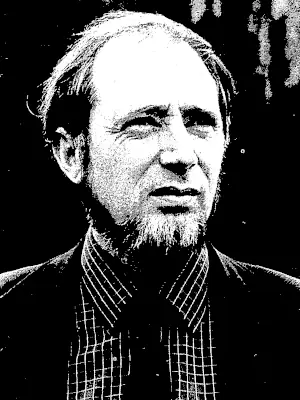
Joe Sheerin was born in 1941 in Dergvone (also recorded in various sources as Dargoon or Daragoon), a townland located near Dowra in County Leitrim, Ireland. He is the son of Patrick Sheerin and Elizabeth Nolan. Raised in a rural environment, he grew up alongside his two brothers, Sean and Patrick H. Sheerin. Patrick H. would eventually pursue higher education at the University of London and go on to teach at the University of Valladolid in Spain. Like a significant portion of the young Irish population facing the economic stagnation of the era, Joe Sheerin emigrated from Ireland to England in the late 1950s.
Education and Professional Career
Upon settling in London, Sheerin worked a succession of various jobs to support himself. His academic journey formally advanced when he entered the University of London in 1966. There, he focused his studies on reading English and German literature. He graduated from the university in 1969 with a M.A. degree in German. He also spent time in North America, studying at McMaster University in Ontario, Canada. Advancing his academic focus, Sheerin later undertook Ph.D. research centered on modern poetry.
Professionally, Sheerin spent much of his career working as a teacher and lecturer in England. During the mid-1970s, he taught at Essex University and ran the Haverhill Poetry Group, a small literary collective consisting of four poets, one of whom was Rupert Mallin.. The group organized public readings at Great Dunmow High School and the Haverhill Folk Club. A notable aspect of Sheerin’s leadership during this period was his firmly egalitarian perspective on literature; he challenged established cultural hierarchies by asserting, “There’s no such thing as good and bad writing. There’s just writing”. By the year 2001, Sheerin was living in Cambridge, England, and by 2013, he was residing in Brighton, continuing his work as a lecturer.
Publishing History
Sheerin began actively publishing his poetry in the mid-1970s. In 1975, the Haverhill Poetry Group published Four, a collaborative selection of their work, through Mallin’s own Stable Press. Shortly thereafter, his work began appearing regularly in prominent Irish publications. His poems were frequently featured in the “New Irish Writing” page of the Irish Press beginning in 1976 and continuing through the 1980s. From 1978 to 1988, he was also a regular contributor to The Honest Ulsterman, a long-running Northern Ireland literary magazine.
A significant breakthrough in his publishing career occurred in 1982 when publishing house Faber and Faber selected Sheerin for inclusion in Poetry Introduction 5. This anthology series was designed to introduce emerging poets with limited magazine circulation to a wider audience, placing him alongside notable contemporaries such as Wendy Cope, Michael Hofmann, and Medbh McGuckian. Following this exposure, Dolmen Press published his first solo collection, A Crack in the Ice, in 1985 at the age of 44. The book was selected as a Poetry Ireland Choice, solidifying his critical reputation. In the following decades, Sheerin released his second major collection, Elves in the Wainscotting, through the OxfordPoets imprint of Carcanet Press in 2002. His poetry was also featured in Oxford Poets 2000: An Anthology.
Sheerin’s literary endeavors were not strictly confined to verse; he also ventured into short fiction, demonstrating a thematic continuity with his poetry. His short story “The Whaler” was selected for inclusion in Phoenix Irish Short Stories 2000, edited by David Marcus. The narrative is structured around a young boy’s long-anticipated encounter with a local legend—a reputed whale hunter who has wholly captured the boy’s imagination. In a thematic echo of Sheerin’s poems, which consistently dismantle romantic illusions, the boy’s idolization shatters upon discovering that his childhood hero is merely a fabricator of tall tales. This unsparing, demythologizing vision seamlessly translates into his prose, underscoring why his work was later selected for Hyphen: An Anthology of Short Stories by Poets (Comma Press, 2013), a collection explicitly exploring the intersection of poetic perspective and short narrative.
Furthermore, Sheerin remained active in public literature events as a member of the Needlewriters Collective, performing in Lewes from 2008 onward and appearing in The Needlewriters anthology in 2015.
Contemporary Critical Reception
Sheerin’s debut collection, A Crack in the Ice, generated significant contemporary critical attention, particularly for its unsentimental and incisive worldview. Reviewing for the Galway City Tribune in November 1985, Michael Gorman observed that Sheerin’s poetry stood out for its careful construction and its “wry and politically aware” perspective. Gorman noted that Sheerin’s physical absence from the centralized Irish literary scene meant he missed out on domestic self-promotion, networking, and institutional residencies, but he praised the poet’s work for its self-mocking tenderness, ultimately declaring it a “remarkable and committed first collection”. Similarly, Michael Dromey, writing in the Irish Examiner in August 1985, lauded the debut as the work of a “fearless voice”. Dromey highlighted Sheerin’s “incisive probings behind the man-made facade” and his ability to lay bare “the bones of hypocrisy” using a biting wit that successfully critiqued modern self-absorption and the humiliations of the exiled life.
However, other critics offered more measured assessments of Sheerin’s unyielding tone. Writing for The Honest Ulsterman in 1986, Michael Parker compared Sheerin’s “acid honesty” and “mordant wit” to that of Shakespeare’s Fool, noting his tendency to speak truth to a world governed by greed, brutality, hypocrisy, and self-interest. Parker praised Sheerin’s inventiveness in reworking classical myths and fairy tales into “savage” Swiftian satires, explicitly citing poems like “A Small Demonstration”. Yet, Parker also identified a structural weakness in this approach: a determination to be so “brutally truthful” that it occasionally resulted in a lack of compassion. He argued that in poems such as “A Country Wife” and “A Study in Charcoal,” Sheerin’s language could have an alienating effect, making the author seem to almost “exult in tragedy” rather than sympathize with his subjects. Ultimately, Parker agreed with Gorman that Sheerin’s autobiographical and elegiac poems—such as “Hospital Visit” and “The Lover”—were his most successful pieces. Both critics noted that in these works, Sheerin exposed his own emotional scars to prompt genuine pity, earning favorable comparisons to the elegies of Tony Harrison and John Montague.
Years later in an interview for Cobweb (a literary magazine of St Patrick’s College, Maynooth), the poet and critic Dennis O’Driscoll reflected on Sheerin’s peripheral status within the Irish literary scene. O’Driscoll criticized the established hierarchy, pointing to the “frequent collusion between the literary editor, the author and the reviewer” that often dictates a writer’s reputation regardless of their actual talent. Expressing a deep sense of injustice for poets overlooked by this cliquish system, O’Driscoll highlighted Sheerin as a prime example of a writer who never received his due. Noting that Sheerin’s output was “far better than that of many well known poets,” O’Driscoll offered the highest praise, describing him simply as “a kind of genius really.”
Meta-Analysis of Sheerin’s Poetry
A comprehensive reading of Joe Sheerin’s poetry reveals an overarching commitment to demystifying the human experience. His writing is characterized by an anti-pastoral stance, rigorous pragmatism, and a distinct refusal to indulge in sentimentality. While many of his Irish contemporaries frequently romanticized rural life or relied heavily on nationalist literary tropes, Sheerin presented a bleak, functional landscape governed by harsh elements, unyielding labor, and emotional suppression.
The experience of the emigrant is a foundational pillar of his work. His poetry systematically dissects the psychological dislocation of exile. He articulates the double life of the rural emigrant thrust into the chaotic, industrial environments of England and America. His speakers often grapple with systemic racism, cultural assimilation, and the gnawing feeling of being trapped between a difficult past and an unwelcoming present.
Despite the severity of his themes, Sheerin’s work is heavily infused with dark humor and satire. He frequently employs surreal or macabre imagery to highlight societal absurdities. Even so, as noted regarding his later collection Elves in the Wainscotting, there is often a quiet thread of optimism in his poetry, suggesting that genuine human relationships are the ultimate antidote to despair and anger.
Discussion of Noteworthy Poems
Sheerin’s stylistic choices and thematic concerns are best understood through an examination of his most prominent individual poems:
- “Backcloth”: This poem strips the romance from the narrative of the departing emigrant. The setting is rendered with stark, unglamorous imagery, featuring a “small / House and the dog and the rutted lane,” alongside an old woman “forever wiping her nose”. The speaker views his own departure as an awkward performance, casting himself as a “bit-part actor” who fluffs his lines and ducks into a car without providing the dramatic final bow.
- “Mind Wandering”: Exploring the generational impact of emigration, this poem recounts Sheerin’s father’s journey to Chicago and his subsequent return. The poem contrasts the overwhelming scale of the American city—where “Trains and / Trams roared” and cars glided between “cliffs of houses”—with the quiet, “pencilled fields” of Ireland. Upon returning to cut turf, the father experiences a psychological overlay of the two worlds, superimposing the image of darkened skyscrapers onto the high peat banks.
- “A True Story” and “Green Experiences”: These companion poems confront the racism and cultural erasure experienced by the Irish in England. “A True Story” recounts the humiliation of searching for lodging among signs reading “No blacks, no Irish, no dogs,” forcing the speaker to trim his words for the “Anglo-Saxon ear” to secure a neutral bed. In “Green Experiences,” Sheerin satirizes the lengths to which an emigrant goes to assimilate, from decoding cricket to changing his surname to Smith, only to be betrayed by his rural Irish habit of forecasting the weather by watching the glide of a swallow.
- “A Small Demonstration”: Displaying his capacity for Swiftian satire, this poem describes a butcher’s shop where non-native “child-meat” is sold alongside rabbits and pheasants. The protest that erupts outside the shop comes not from morally outraged citizens, but from local turkey farmers and rabbit-breeders, who beg the shoppers to “Think on their thin children pining at home”.
- “Heroics”: This piece provides an earthy recollection of Sheerin’s father’s brutal labor on their small farm. Sheerin compares the grueling, endless nature of agrarian work to mythological labors, observing his father laboring with a graip to move “a pyramid of rank dung” and fighting off foxes to protect his livelihood. The poem ends with the grim realization that, despite his lifelong toil, the farmer never completed any of his labors.
- Elegies (“Hospital Visit” and “The Lover”): These two poems deal with the deaths of his mother and father, respectively, and are noted for their exacting emotional restraint. In “Hospital Visit,” the sterile, bureaucratic reality of death is highlighted as the speaker receives his mother’s effects in a bag—a dress, an overcoat, and stained dressings—which he cannot bear to touch. “The Lover” employs a stark personification of death, portraying his father’s physical decline as a courtship with “Death’s daughter,” ultimately leading to his deceptive elopement into a “single / Bed in a dark church”.
- “Let Us Now Praise”: Functioning as an anti-pastoral, this poem refuses to romanticize the rural poor. Sheerin praises the “unpraised people” who lived on “milk and salted potatoes” and shared their houses with calves and pigs, enduring awful stenches and physical breakdown. Rejecting the literary tropes of the “home rebel” or the “parsonage eccentric,” he concludes that for these people, “Their only triumph, survival”.
- “A Discourse on Aesthetics”: This poem reflects Sheerin’s overarching pragmatic philosophy. It narrates the haphazard painting of a barn using leftover colors without preparing the wood, resulting in a streaked, impressionistic finish. When faced with criticism regarding the building’s aesthetic appeal, the painter retorts with simple utility: “Beauty, he said, is what keeps out the rain”.
Through a long career balancing teaching and writing, Joe Sheerin produced a body of work that remained steadfastly observant, shunning literary posturing in favor of documenting the unvarnished realities of exile, labor, and mortality.
Works
Books
- Poetry Introduction 5 [contributor] (1982)
- A Crack in the Ice (1985)
- Oxford Poets 2000: An Anthology [contributor] (2000)
- Phoenix Irish Short Stories 2000 [contributor] (2000)
- Elves in the Wainscotting (2002)
- The Needlewriters anthology [contributor] (2015)
Other Works
- Four [contributor] (1975)
References
- A Crack in the Ice by Joe Sheerin. (1985, August 30). Longford Leader, p. 2.
- Cartright, I. (1994, Autumn). Interview with Dennis O’Driscoll. Cobweb, (1). Retrieved from https://www.jstor.org/stable/43958676.
- Dromey, M. (1985, August 22). Fine debut for fearless voice. Irish Examiner, p. 10.
- Gorman, M. (1985, November 8). Joe Sheerin: The Power of Exile. Galway City Tribune, p. 19.
- Loske, S. (2012, October 7). Frogmore looks back over thirty years. The Frogmore Press. https://frogmore-jp.blogspot.com/2012/10/frogmore-looks-back-over-thirty-years.html
- Loske, S. (2015, April 2). The Needlewriters anthology launched at Needlemakers in Lewes, and other news. The Frogmore Press. https://frogmore-jp.blogspot.com/2015/04/theneedlewriters-anthology-launched-at.html
- Mallin, R. (2022, September 6). Autobiography 1974-7 – me and poetry. Art’s Trojan Horse. https://rupertmallin.buzzsprout.com/230347/episodes/11268338-autobiography-1974-7-me-and-poetry
- Mallin, R. (2023, March 24). Rupert Mallin in conversation with Martin Stannard. Rupert Mallin. https://www.rupertmallin.co.uk/2023/03/rupert-mallin-in-conversation-with.html
- New Irish Writing: Joe Sheerin. (1978, April 1). Irish Press, p. 9.
- Parker, M. (1986, Spring). A Bitter Fool. The Honest Ulsterman, 80, 53–55. Retrieved from https://www.huarchive.co/items/show/115.
Notes
A chronological list of some of Joe Sheerin’s published poems, including the poem name, publication source, and the date of publication:
1976
- “The Wall” — Irish Press (16 April 1976)
- “Three Landscapes” — Irish Press (16 April 1976)
- “Grass Roots” — Irish Press (30 October 1976)
1977
- “Moving House” — Irish Press (9 July 1977)
- “An Apprentice Builder” — Irish Press (9 July 1977)
1978
- “Settling In” — The Honest Ulsterman (No. 58, Jan–Feb 1978)
- “The Lemon” — The Honest Ulsterman (No. 58, Jan–Feb 1978)
- “Burying a Baby” — The Honest Ulsterman (No. 58, Jan–Feb 1978)
- “Old Irish Writing” — Irish Press (1 April 1978)
- “A Fisher of Men” — Irish Press (1 April 1978)
- “A Study in Charcoal” — Irish Press (1 April 1978)
- “A Doctor of Sorts” — Irish Press (1 April 1978)
- “Gastarbeiter” — Irish Press (9 September 1978)
- “Confirmation” — Irish Press (9 September 1978)
1979
- “The Lover” — The Honest Ulsterman (No. 62, Mar–Jun 1979) Also cited in the Galway City Tribune on 8 Nov 1985.
- “Habits” — The Honest Ulsterman (No. 62, Mar–Jun 1979)
- “In the Valley of the Black Pig” — Irish Press (11 August 1979)
- “The Soothsayer” — The Honest Ulsterman (No. 64, Sep 1979–Jan 1980)
- “The Confession” — The Honest Ulsterman (No. 64, Sep 1979–Jan 1980)
- “Explorers” — Irish Press (6 October 1979)
1980
- “Night Conversations” — Irish Press (1 March 1980)
- “Corncrake in Natural History Museum” — Irish Press (1 March 1980)
- “A True Story” — Irish Press (1 March 1980) Also cited in the Galway City Tribune on 8 Nov 1985.
- “Filling a Form” — Irish Press (1 November 1980)
- “The Old House” — Irish Press (1 November 1980)
- “A Country Icarus” — Irish Press (1 November 1980)
- “Backcloth” — Irish Press (1 November 1980) Also cited in the Galway City Tribune on 8 Nov 1985.
- “The Christening” — The Honest Ulsterman (No. 67, Oct 1980–Feb 1981)
1981
- “A Discourse on Aesthetics” — Irish Press (11 July 1981)
- “Mind Wandering” — Irish Press (July 11, 1981) Also cited in the Galway City Tribune on 8 Nov 1985.
- “Heroics” — The Honest Ulsterman (No. 70, Nov–Dec 1981) Also cited in the Irish Examiner on 22 Aug 1985.
- “A Morning Visit” — The Honest Ulsterman (No. 70, Nov–Dec 1981)
1983
- “A Small Demonstration” — Irish Press (3 March 1983)
- “Drifters” — Irish Press (3 March 1983)
- “Magus” — Irish Press (3 March 1983)
- “Burying” — Irish Press (3 March 1983) Also in Poetry Ireland Review (No. 12, Winter 1984/1985).
- “Soothsaying” — Irish Press (15 September 1983)
- “The Jailors of Icarus” — The Honest Ulsterman (No. 74, Winter 1983)
- “Household Deities” — The Honest Ulsterman (No. 74, Winter 1983)
- “Hospital Visit” — The Honest Ulsterman (No. 74, Winter 1983) Also in the Galway City Tribune on 8 Nov 1985.
- “A Country Wife” — The Honest Ulsterman (No. 74, Winter 1983)
- “Agony Column” — The Honest Ulsterman (No. 74, Winter 1983)
1984
- “Patrick’s Purgatory” — Irish Press (30 November 1984)
- “Lovers” — Irish Press (30 November 1984)
1985
- “A Cup of Tea” — Irish Examiner (22 August 1985)
- “Green Experiences” — Irish Examiner (22 August 1985) and Galway City Tribune (8 November 1985) (Note: this poem is virtually identical to 1983’s “Soothsaying”).
- “He Exalts the Humble Etc.” — Irish Press (5 October 1985)
1986
- “Eminent Victorians” — Irish Press (17 May 1986)
- “Let Us Now Praise” — Irish Press (14 June 1986)
1988
- “A Second Language” — Poetry Ireland Review (No. 21, Spring 1988)
- “An Equestrian Event” — Poetry Ireland Review (No. 21, Spring 1988)
- “Miracle” — The Honest Ulsterman (Krino No. 6, Autumn 1988)
- “Palmers’ Kiss” — The Honest Ulsterman (Krino No. 6, Autumn 1988)
- “Scarecrow” — The Honest Ulsterman (Krino No. 6, Autumn 1988)
1992
- “Lovebirds” — Poetry Ireland Review (No. 35, Summer 1992)
Elves in the Wainscotting (2002) contains the following 59 poems:
- Medical Advice
- Photofit
- A Small Demonstration
- Cine Verite
- Household Deities
- Persephone
- Honeymood
- The Jailors of Icarus
- Heroics
- The Soothsayer
- A Ghost’s Life
- Loki
- Oedipus
- Magus
- Green Experiences
- Hospital Visit
- The Lover
- Burying
- The Christening
- A Cup of Tea
- Mind Wandering
- Early Carvings
- The Old House
- Backcloth
- Alter Id
- Beatitudes
- Abbey
- Lovebirds
- Pleasure Seekers
- Genesis
- Local Historian
- Incident at a Post Office Counter
- Naming
- Elves
- Palmer’s Kiss
- Miracle
- ‘When it happens’
- Stalag
- Closing Time
- Don’t Ask
- Ceremonies
- The Last Days of Jesus
- First Reader
- Old Customs
- Mermaid
- Seaside Postcard
- Planning the Future
- Orpheus
- A Short History
- Morning
- A Walk
- Rescuing a Puppy
- Frieze in the British Museum
- Love’s Alchemist
- Reassurance of Hands
- Nightfears
- On Solving Problems
- Oedipus Shopping
- The Autism of Pigs