
Ray Lynott
Biography
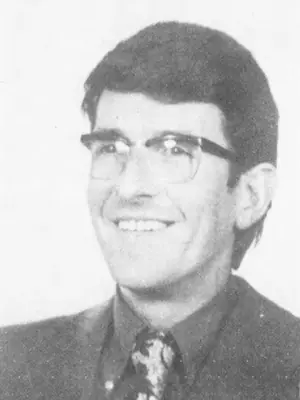
Ray Lynott is an Irish broadcaster and author whose career spans decades across Raidió Teilifís Éireann (RTÉ) radio and modern Irish literature. Known to listeners as a steady, measured voice guiding them through classical music and radio documentaries, Lynott also established himself as an award-winning writer of short stories deeply rooted in the landscape and folklore of his native Leitrim.
Early Life and Education
Ray Lynott was born in 1943 in Manorhamilton, County Leitrim, to James Lynott and Lorna Scott. His early education took place at St. Patrick’s College in Cavan, which provided a foundation for his lifelong interest in the arts and humanities. He later attended Trinity College Dublin, undertaking rigorous academic study that resulted in a Bachelor of Arts in Semitic Languages and a Higher Diploma in Education. In July 1973, he was awarded a Master of Literature from Trinity College; local newspapers at the time noted that his parents, with his father then eighty-five years old, travelled from Manorhamilton to Dublin to attend the conferring ceremony.
Outside of his formal studies, Lynott developed a deep proficiency in music. He was an accomplished pianist and organist, an expertise that directly informed his professional trajectory. Commenting on his varied talents, the Leitrim Guardian noted in 1975 that he “could easily have made a career in music,” adding that he was “a man of many parts, musician, poet, writer, student, announcer — and withal a very modest man.” This musical foundation would ultimately become the bedrock of his extensive career in broadcasting.
Classical Music and Presenting
In the 1970s, Lynott became a familiar presence on RTÉ radio. While his duties as an announcer and presenter saw him compere general interest programs such as Hospital Requests and Rogha Ceoil, his most notable contributions were in the realm of classical music. He presented series like Harmonies of Life, which explored the lives of classical composers and the places they cherished, bringing a sense of narrative to musical history.
His work on the program Opera Matters earned consistent praise for its meticulous research and approachability. In a November 1984 review for the Irish Press, radio critic Mary Lappin observed: “There’s no denying the best researched RE1 programme is Opera Matters. Week after week Ray Lynott demonstrates with consummate and hypnotic ease how musical programmes can be made stimulating as well as informative.” Two years later, she named him her favourite music presenter. Over a decade later in 1994, columnist Mary Mac Goris echoed this sentiment, describing Lynott as having, “for my money, the most agreeable speaking voice ever heard on Irish radio.”
In addition to his regular programming, Lynott held a particular place in the history of the national broadcaster. On 8 November 1976, he was the announcer tasked with making the final closure broadcast before RTÉ relocated from its historic Henry Street studios.
Interviews and Documentaries
Beyond presenting recorded classical pieces, Lynott was a skilled interviewer and documentarian. Across his various radio programs, he spoke with a wide array of figures in the musical field, engaging musicians, opera singers, symphony conductors, and ballet dancers. In January 1980, he broadcast an interview with the renowned Italian tenor Luciano Pavarotti. Rather than focusing strictly on vocal technique, Lynott drew out the singer’s personal reflections. A reviewer for the Evening Echo noted that Lynott “handled his interview well, acting as an unobtrusive foil to the Italian, who quite obviously wanted to talk about himself and his career.” Through Lynott’s prompting, the audience learned of Pavarotti’s off-stage interests in painting, playing tennis, and driving fast cars.
Lynott applied the same careful listening to his documentaries on Irish life. In his 1987 piece, Rose, a day in the life of a Dublin woman, he spent a day with Rose Ahearne, a seventy-year-old cleaner at Whitefriar Street Church. Through relaxed conversation, she humorously recalled her late husband’s job at Glasnevin Cemetery, noting that he spent his days “putting down the customers, none of whom even said Thank You.” The following year, in Fishamble Street: Then and Now, Lynott walked the area with a local resident, Patrick Casey, recording the changing face of one of Dublin’s oldest neighbourhoods.
A Creative Partnership
One of the most defining aspects of Lynott’s radio career was his decades-long professional relationship with Oenone Venetia Carew-O’Sullivan, known to listeners as Venetia O’Sullivan or Carey Kent. After returning to Ireland from a two-year trip around the world in 1982, Lynott was asked by Carew-O’Sullivan to present a travel diary. She compiled the program so that music directly complemented his spoken word. The resulting series, A Traveller’s Tune, was a critical success and won a Jacob’s Award.
In 1985, to mark the 400th anniversary of the birth of composer Domenico Scarlatti, Lynott and Carew-O’Sullivan spent two months travelling through Italy, Portugal, and Spain to produce the twelve-part series In Search of Scarlatti. In a 2008 tribute written following her passing, Lynott recalled their first night in a Naples restaurant. Feeling uneasy about the project’s direction, he asked her what they were actually searching for. She replied, “We have to wait and see, dear. We’re here, where it all began. We have to wait, explore, see what happens.”
Lynott described their working relationship as demanding but highly rewarding. He recalled her insistence on high standards: “With Venetia O Sullivan one could never be sloppy, one could never be imprecise, woolly, inaccurate… And if she came to trust you, believed in you, that was everything.” He also noted her deep curiosity about the wider world, observing that receiving one of her “tightly written but quite legible postcards was a great pleasure, and ample evidence that she herself could have been travel-writer par excellence, if fate had so ordained.”
Literary Pursuits
Parallel to his career in broadcasting, Lynott built a substantial body of work as an author. He was a two-time winner of the Hennessy New Irish Writing Award, a prestigious prize established to recognise and encourage emerging literary talent in Ireland. He secured his first award in 1975 for his short story “Dinnyfather’s Daughter and the Fair of Lurganboy.” Reflecting on the story, the Leitrim Guardian wrote that it was “a delight to read, a story which made one sorrow over and more deeply love than ever, the whole human race.” He won the award again the following year for his story “The Wildest Sound.” Discussing the piece in October 1976, judge and novelist Alan Sillitoe described it as “a beautifully muted but meaningful version of the modern suburban menage-a-trois… told from deep inside a tormented soul.”
Also in 1975, Lynott won the M. J. McManus Literary Award for his short story “Bembo.” Rooted in the folklore of the Manorhamilton area, the narrative takes its name from a local mountain to craft a dark, origin myth. It explores the consequences of primitive superstition, depicting an isolated tribe that projects its existential dread and failing harvests onto an innocent, eccentric child. The story showcases Lynott’s ability to infuse psychological tension with stark imagery, capturing the suffocating weight of communal paranoia:
“They would look at the shadowey child sometimes and shake their heads muttering dismay at her bad fortune or sighing their less articulate despair, or most often and more quietly they whispered together their fear of her presence among them.”
In the late 1970s, Lynott became involved with the Irish Writers’ Co-operative, a Dublin-based group formed to bypass traditional publishing gatekeepers and support modern Irish writers. Backed by a portion of a £3,000 grant from the Arts Council (An Chomhairle Ealaíon), the cooperative published Lynott’s short story collection, A Year in the Country, in 1978. Structured with twelve stories representing the months of the year, the book sold out its initial run of 2,000 copies and went into a second printing.
The collection, set in his native Leitrim, polarised reviewers. A critic in the Donegal Democrat felt the book offered a harsh view of the county, describing it as a “conglomeration of cynicism and raillery” populated by characters with “weird idiosyncrasies.” In contrast, the Irish Examiner offered high praise, viewing the book as an accurate portrayal of modern rural life that captured “the triumphs, the sadnesses, the joys, the chicanery, the politicking.” The reviewer noted, “This is beautifully and sensitively written stuff, full of sympathy, irony and an innate sense of lyricism which at times verges on the poetic.”
Local Histories and Later Years
In addition to fiction, Lynott contributed personal essays and reflections to local publications. In his 1983 Leitrim Guardian essay “Two Leitrim Ladies,” he profiled Mother Patricia, a former lace-maker turned hospital worker with “the biggest pair of hands of any woman I’ve known,” and Lizzie, an emigrant cook in New York whose work he equated to that of an “artist and professional.” Recalling humorous details of Lizzie’s failed driving tests alongside Mother Patricia’s quiet presence, Lynott reflected on their lasting, unassuming impact: “One is more alive and cheerful because of people like Lizzie and Mother Patricia. They seem to take care even of our memories.”
Long after stepping away from daily broadcasting, Lynott maintained his connection to the literary community and local history. In August 2009, he participated in the first Written Word Weekend in Drumshanbo, County Leitrim, reading his work alongside five other authors, including Ita Daly. Demonstrating his ongoing commitment to recording his home county’s past, he also contributed to the historical volume Shades of War in North Leitrim 1919-1923, published by the Manorhamilton and District Historical Society in 2023. Through his decades on the radio, his careful stewardship of classical music, and his distinct voice in Irish fiction and history, Ray Lynott has documented the lives, landscapes, and sounds of Ireland with care and precision.
Works
Books
- A Year in the Country (1978)
Other Works
- Bembo [story] (1975)
- Dinnyfather’s Daughter and the Fair of Lurganboy [story] (1975)
- Grey River [poem] (1975)
- In the Bee Park [poem] (1975)
- Mary [poem] (1975)
- The Wildest Sound [story] (1976)
- Happy Families [play] (1980)
- Two Leitrim Ladies [essay] (1983)
- Alternative Loves [contributor] (1994)
- Tribute to Oenone O'Sullivan née Carew (2008)
- Trinity Tales: Trinity College Dublin in the Sixties [contributor] (2009)
- Shades of War in North Leitrim 1919-1923 [contributor] (2023)
References
- Breslin, S. (1979, January 25). Moon country. Irish Press, 6.
- C, T. (1979, March 1). Twelve tales. Irish Examiner, 10.
- Casey, P. (1980, January 19). Meeting A Great Tenor. Evening Echo, 4.
- Democrat Diary: It Occurs to Me. (1978, December 15). Dongal Democrat, 9.
- Fishamble Street then and now. (1988, April 11). RTE Radio. https://www.rte.ie/radio/doconone/646676-radio-documentary-fishamble-street-then-and-now
- Interesting Array of Talent. (1983, March 26). Evening Echo, 3.
- Lappin, M. (1984, November 3). Radio Review. Irish Press, 8.
- Lappin, M. (1986, January 18). Radio Review. Irish Press, 17.
- Leitrim Writers for Hennessy Awards. (1976a, October 23). Leitrim Observer, 1.
- Lynott, R. (1975). Bembo. The Leitrim Guardian, (7), 59–61. https://leitrimdoc.ie/leitrim-guardian-journal-1969-1999/
- Lynott, R. (1983). Two Leitrim Ladies. The Leitrim Guardian, (15), 112–113. https://leitrimdoc.ie/leitrim-guardian-journal-1969-1999/
- Mac Goris, M. (1994, February 26). I found Peter again! Irish Independent Weekender, 9.
- May night for Wexford. (1995, October 18). RTÉ Archives. https://www.rte.ie/archives/2025/1010/1537885-may-night-for-wexford/
- Rose: A day in the life of a Dublin woman. (1987, January 5). RTE Radio. https://www.rte.ie/radio/doconone/647011-documentary-podcast-rose-a-day-in-the-life-of-a-dublin-woman
- R.T.E. Announcer get Literature Award. (1973, July 7). Leitrim Observer, 9.
- RTÉ radio last broadcast from Henry Street. (1976b, November 8). RTÉ Archives. https://www.rte.ie/archives/2016/1107/829820-rtes-henry-street-days-are-over/
- [Second printing of short story collection]. (1979, January 28). Sunday Press, 13.
Notes
Throughout his career, Lynott presented numerous radio programs, including: A Traveller’s Tunes, And Music Too, Early On, Hospital Requests, Interval, Morning Call, Music and Memories, Music Magazine, Music Then and There, Opera Matters, Piano People, Playback, The Leading Note, and Time for Music.